
Supervision that meets you where you are and supports who you are becoming.
Most residents begin supervision with some combination of skill, uncertainty, confidence, and self-doubt.
You may know what to do in session but question your clinical judgment afterward. You may have strong clinical instincts but struggle to trust yourself. You may be carrying the pressure of wanting to do excellent work while still learning who you are as a therapist.
This is where clinical supervision can have the most impact: building on and extending your strengths while helping you grow beyond the edges of your comfort zone. We focus on confidence through clinical competence—a lifelong process of developing knowledge, refining skills, and strengthening clinical judgment.
My goal is to help you trust your decisions, develop your therapeutic voice, and become the therapist you want to be.
As an AAMFT Approved Supervisor and Licensed Marriage and Family Therapist, I provide structured supervision that combines support, thoughtful challenge, observation, and feedback to help you grow into an effective and confident clinician.
I believe growth happens when therapists feel both supported and challenged.
Supported enough to be honest about what they don’t know.
Challenged enough to continue growing beyond what is comfortable.
Whether you are beginning residency or looking for a supervision experience that offers more than case consultation alone, supervision is a space where you can develop your clinical voice, strengthen your professional identity, and become a more confident and effective therapist.
Why Work With an AAMFT Approved Supervisor?
✓ LMFT Licensure Support
Virginia LMFT Residents must complete at least 100 supervision hours with an LMFT supervisor. Supervision with me counts to meet this requirement for LMFT Residents.
✓ Trained in Therapist Development
AAMFT Approved Supervisors receive specialized training in supervision, therapist development, and clinical feedback. (see Additional Trainings in Supervision) Supervision is designed to support you to develop your own clinical voice, professional identity, and effectiveness as a therapist – whatever lens supports your work.
✓ Structured Clinical Growth
Supervision designed to strengthen clinical judgment, confidence, and therapeutic effectiveness.
✓ Observation & Feedback
Direct observation and constructive feedback to support ongoing professional development.

Why Residents Choose This Supervision
Beyond Case Consultation
Case discussion is an important part of supervision, but it is only one part of clinical growth.
Supervision at Courage to Blossom combines consultation, observation, feedback, and structured professional development to help residents strengthen both their clinical thinking and their work in the therapy room.
Residents receive:
✓ Small, consistent cohorts/groups
✓ Individual or dyadic supervision
✓ Structured case consultation
✓ Direct observation and feedback
✓ Video Review and Feedback
✓ Competency-based professional development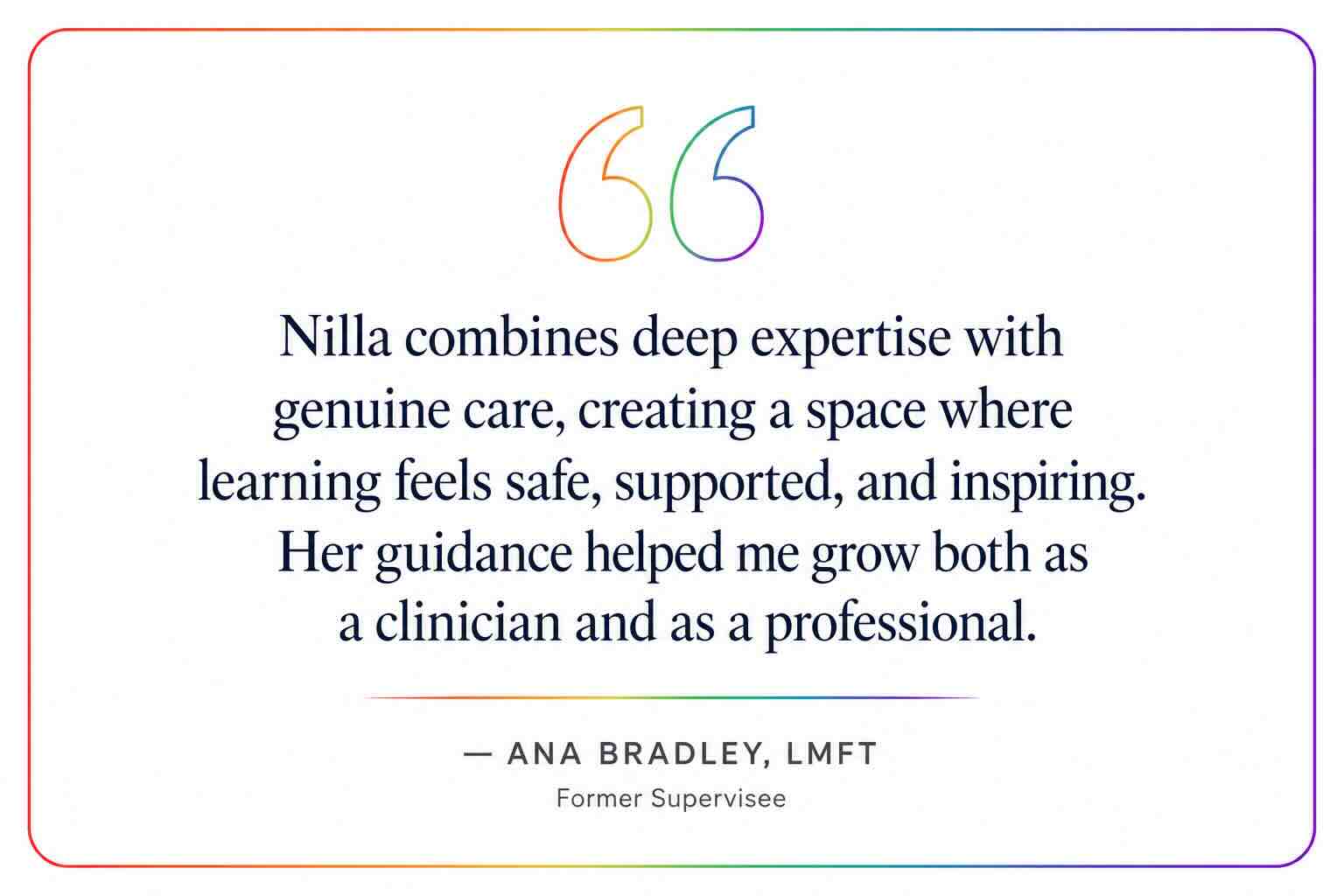
A Structured Approach to Clinical Growth
Supervision is most effective when residents have opportunities to reflect on their work, receive and give meaningful feedback, and apply new learning over time.
Supervision Fees and Schedules
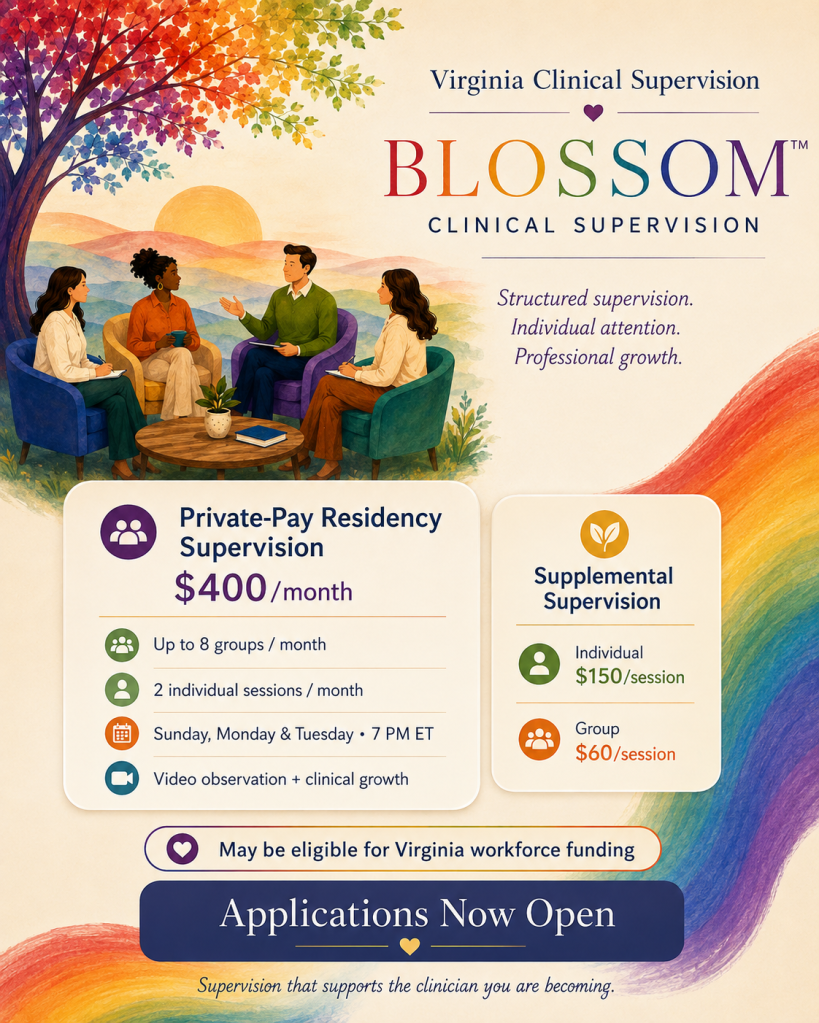
All supervision is provided virtually via secure videoconferencing. Supervision is flexible, allowing busy residents to choose the supervision times that best supports their schedule.
Meeting Times:
Sundays, Mondays, Tuesdays (Eastern Time)
Weekly Groups
Group Supervision
7:00 PM – 8:00 PM
Individual Supervision
Individual or Dyadic Supervision (1 hour)
(Open scheduling)
Included for each resident
- Up to 8 group-supervision hours in a standard month.
- Two guaranteed individual/dyadic-supervision hours monthly
- Additional dyadic supervision when needed for ratio compliance, subject to available subscription capacity
- Two structured group case presentations each month (required)
- Video Observation
- Individual clinical-development plan and clinical support work
- Quarterly progress and competency review with Board documentation
- Ethical, documentation, and professional-development consultation
- Limited between-session consultation for urgent clinical questions
Access to 12-14 hours supervision in a typical month
Maximum 6 Residents per group
My Supervisory Style
My approach is active, collaborative, and developmentally focused.
Residents who work well with me often appreciate:
• Honest, direct feedback
• Clear expectations and accountability
• Thoughtful challenge paired with support
• Practical guidance they can immediately apply in session
• Space for reflection, discussion, and professional growth
Clinicians who work with me develop the confidence, judgment, skills, and professional identity needed to practice ethically, effectively, and independently.
My Approach to Feedback
In my supervision, you’ll receive direct, constructive feedback designed to help you grow faster and practice with greater confidence. We’ll identify your strengths, address skill gaps, and focus on the clinical judgment needed for independent licensure.
You won’t be left guessing. You’ll leave supervision with a clearer understanding of what to improve, how to improve it, and what to focus on in your next sessions.