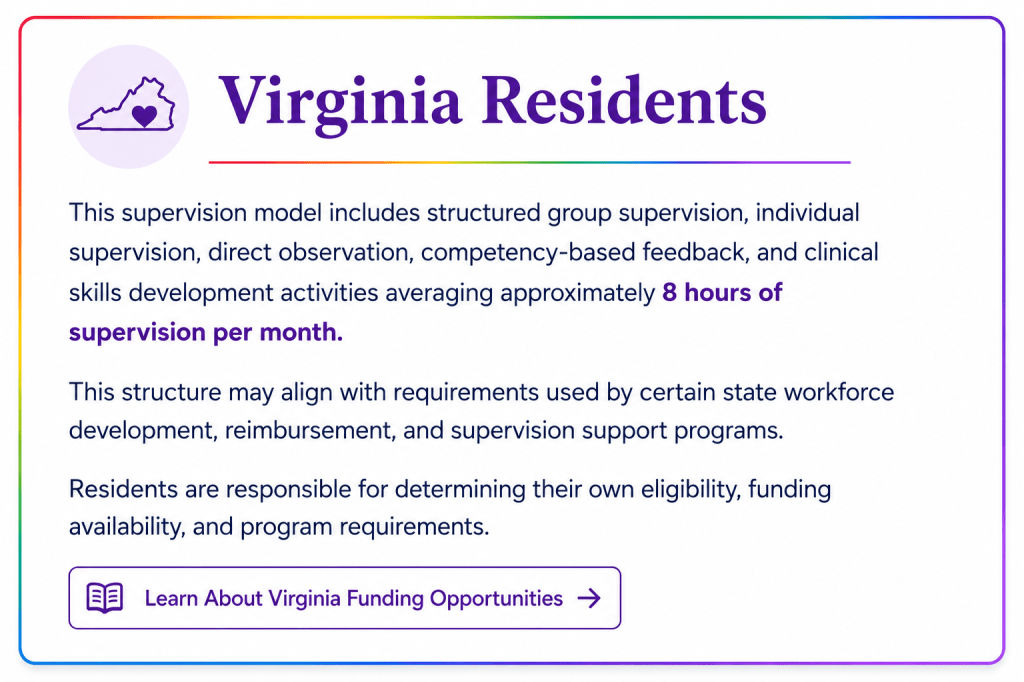
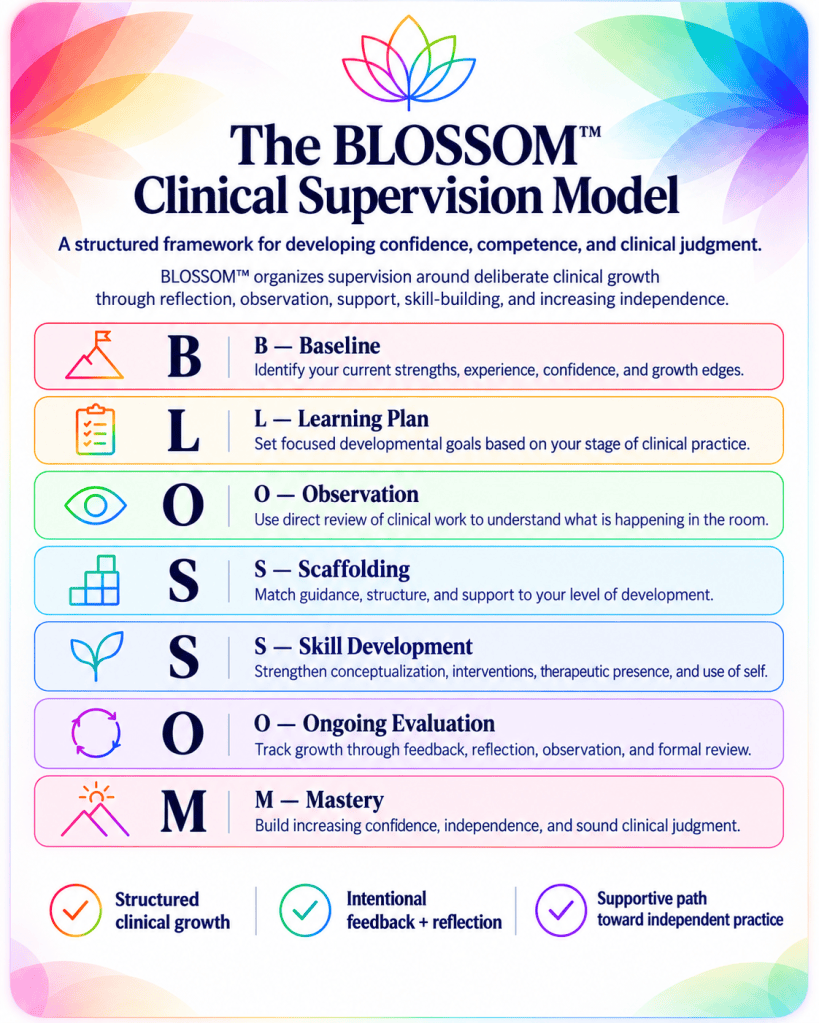
The BLOSSOM™ Clinical Supervision Model is a structured, developmental approach to clinical supervision for MFT, CPC, LPC interns and residents in Nevada and Virginia working toward independent licensure.
Through group supervision, individual and dyadic supervision, observation, structured feedback, and intentional skill development, we focus on how you think, how you practice, and how you are developing as a clinician.
The goal is not simply to help you complete licensure requirements. The goal is to help you become a stronger clinician.
BLOSSOM™ combines multiple forms of clinical supervision to support different dimensions of your development:
Group Supervision
Group supervision is a structured space for case staffing, clinical consultation, self-of-the-therapist exploration, and professional development. Across the BLOSSOM™ curriculum, we work through a broad range of clinical and developmental topics—from case conceptualization, assessment, ethics, risk, diagnosis, treatment planning, interventions, documentation, and complex relationship dynamics to culture, identity, power, boundaries, countertransference, therapeutic use of self, professional confidence, and the development of your own clinical voice.
The focus changes with the needs of the cohort and the clinicians in the room, allowing supervision to remain both comprehensive and directly relevant to your current work.
Individual & Dyadic Supervision
Individual supervision provides focused attention to your clinical development, professional goals, and evolving therapeutic identity.
Through reflection, targeted feedback, observation, and deliberate practice, we identify areas for growth and build a development plan that changes as your competence and experience increase.
WE move beyond asking, “What happened in session?”. We examine:
- What clinical decisions were made?
- Why were they made?
- What alternatives existed?
- What skill is developing next?
Over time, this process helps transform clinical knowledge into increasingly independent clinical judgment.
Observation & Clinical Review
Self-report is an important part of supervision. It helps us understand how you experienced a session, what you noticed, what you were considering clinically, and where you felt uncertain or confident. At the same time, self-report offers only one perspective on your work. Direct observation widens that perspective, helping us notice strengths, patterns, interactions, and opportunities for growth that may be difficult to recognize while you are actively engaged in the work.
Using your own recorded clinical work as a foundation, we explore what is working, identify opportunities for growth, and build greater confidence, intention, and effectiveness in the therapy room.
Find the BLOSSOM™ Supervision Option That Fits You
Why I Developed the BLOSSOM™ Clinical Supervision Model
I developed BLOSSOM™ because I care about what happens in the spaces beyond the required hours. I want supervision to be a place where you can bring the parts of the work that feel exciting, confusing, challenging, or unfinished—and know that there is room to think, learn, ask questions, and grow without having to already have everything figured out.
Over time, I have come to believe that clinicians grow best when they are given more than one way to learn. Reflection matters. So does direct observation. Case consultation matters. So do self-of-the-therapist work, thoughtful feedback, deliberate practice, and opportunities to try something new and return to talk about what happened.
BLOSSOM™ brings those pieces together in a structured developmental model designed to help you strengthen your clinical judgment, deepen your self-awareness, expand your skills, and become more confident in your own therapeutic voice.
Of course, supervision should help you meet the requirements for licensure. But I want it to offer you more than that. I want you to leave supervision with a stronger sense of who you are as a clinician, greater trust in your judgment, and a foundation you can continue building on long after our work together ends.
Ready to Explore Supervision?
If BLOSSOM™ feels like the kind of supervision experience you are looking for, I’d love to learn more about you, where you are in your clinical development, and what you hope to gain from supervision.
The application is the first step. It helps us determine fit, availability, and which supervision option best supports your licensure path and professional goals.